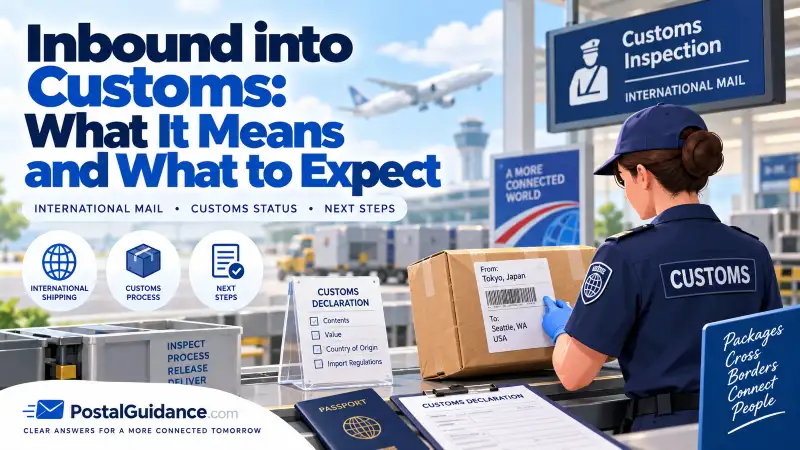
Inbound Into Customs means your international package has arrived in the destination country and is going through customs clearance. It is a normal, expected step, not a lost or stuck package. Most shipments clear in under 24 hours and move on to local delivery. It only drags on if the package gets flagged for a paperwork problem, unpaid duties or taxes, a restricted item, or a physical inspection, in which case it can take days or occasionally weeks.
Here is what the status means, how long clearance really takes, why customs holds a package, who pays duties, and what to do if yours sits there.
What does Inbound Into Customs mean?
It means the package has landed in the destination country and been handed to that country’s customs authority for review before it can be delivered. During this step, customs checks the shipment’s paperwork, assesses any duties and taxes owed, confirms the declared contents and value, and screens for prohibited or restricted items. Once it passes, the package is released to the local postal service or courier for final delivery.
In the U.S., this review is handled by U.S. Customs and Border Protection working alongside USPS or the courier. The status simply marks that your package is in that queue, it is a routine checkpoint every international shipment passes through.
Is my package stuck or lost?
Neither, in almost all cases. Inbound Into Customs is a processing stage, not a problem. The package is accounted for and sitting in the customs queue, which is very different from a lost item that has no recent scans. Seeing this status for a day or so is completely normal, especially since customs does not scan a package continuously while it reviews it, so the tracking can look frozen even though nothing is wrong.
It is only worth concern when the status stays put well beyond the normal window with no movement, which usually points to one of the specific holdups below.
How long does customs clearance take?
For most shipments, clearance is quick:
- Typical: under 24 hours when the paperwork is correct and any duties are prepaid or promptly paid.
- Flagged shipments: a few days if a physical inspection or document check is needed.
- Problem shipments: weeks, occasionally longer, if there is a serious paperwork issue, unpaid duties left unresolved, or a restricted-item question.
Speed depends on the contents, the destination country, the shipping season (peak periods slow everything down), and whether anything needs resolving. Choosing an experienced international seller and a major carrier tends to keep clearance smooth.
Why customs holds a package
When a package does get held, it is almost always one of these:
- Incomplete or incorrect paperwork. A missing invoice, wrong declared value, or an incorrect customs form is the single most common cause. The importer of record is legally responsible for the accuracy of the declaration, no matter who filled it out.
- Duties or taxes owed. If import charges are due and unpaid, customs holds the package until they are settled. This is common on DDU shipments (more on that below).
- Restricted or prohibited items. Restricted goods may need a permit, and prohibited items, things like certain foods, plant or animal products, weapons, or hazardous materials, can be seized outright.
- A security or high-value check. Expensive items or certain product categories draw extra scrutiny, including X-ray or physical inspection.
This is the same category of delay you see on carrier-specific statuses too, our guide on DHL Shipment On Hold covers the equivalent customs holds on DHL shipments.
Duties and taxes: who pays?
Usually the recipient. Customs assesses duties (a tax based on the type of product) and import taxes on the declared value, and the person receiving the package typically has to pay before it is released. Two shipping terms decide when that happens:
- DDP (Delivered Duty Paid): the seller has already paid the duties, so nothing is owed on arrival and the package moves through without a payment hold.
- DDU (Delivered Duty Unpaid): the buyer pays the duties on delivery, so the package is held until you settle the charge.
You can often avoid a payment delay by prepaying: some online stores collect estimated duties at checkout, and carriers like USPS, UPS, FedEx, and DHL let you prepay or get billed through their portals. If a payment is requested, the carrier or postal service usually contacts you by email or phone with the amount and how to pay, and paying quickly is the fastest way to release the package. The official duty and import rules are published by U.S. Customs and Border Protection if you want to check specifics.
What to do if your package is stuck in customs
If the status has sat on Inbound Into Customs longer than a day or two, work through these:
- Keep monitoring the tracking. Customs does not rescan continuously, so an update may appear on its own once the review finishes.
- Give it time during peak seasons. Holiday periods and volume surges slow clearance for everyone.
- Check for a payment or document request. The most common actionable holds are unpaid duties or missing paperwork. If the carrier has emailed or texted you, respond immediately, that is often all it takes.
- Contact your carrier. USPS, UPS, FedEx, or DHL can tell you the customs status and whether anything is needed from you.
- Contact customs directly if needed. For a hold the carrier cannot explain, you may need to reach the customs authority at the port of entry to learn what will release it.
If the tracking goes completely quiet, the same wait-versus-act logic applies as with any stalled shipment, covered in USPS tracking not updating.
What happens after it clears?
Once customs releases the package, the tracking updates to something like Cleared Customs or Released, and the package is handed to the local postal service or courier for final delivery. From there you get the normal domestic delivery timeline for your area and service level, our guide on mail delivery time from ZIP to ZIP gives a sense of how long that final leg takes. If your item needs a signature, you may have to sign on delivery or pick it up locally.
How to avoid customs delays
Most delays are preventable with a little preparation, whether you are shipping or receiving:
- Declare accurately. Complete the customs form with correct descriptions and values, and include the invoice and any required documents.
- Know what is restricted. Check the destination country’s rules before shipping, and as a recipient, understand what you cannot legally import.
- Prepay duties where you can. If the seller or carrier offers prepayment, use it to skip the payment hold entirely.
Frequently asked questions
What does Inbound Into Customs mean?
It means your international package has arrived in the destination country and is going through customs clearance. It is a normal step, not a lost package, and most shipments clear within 24 hours.
How long does a package stay in customs?
Usually under 24 hours when the paperwork is correct and duties are paid. If the shipment is flagged for inspection, a document issue, or unpaid duties, it can take days or occasionally weeks.
Is my package lost if it says Inbound Into Customs?
No. The package is in the customs queue and accounted for, which is different from a lost item. Customs does not scan continuously, so the tracking can look frozen while the review happens normally.
Who pays customs duties and taxes?
Usually the recipient, unless the shipment is Delivered Duty Paid (DDP), where the seller already paid. On Delivered Duty Unpaid (DDU) shipments, the package is held until the buyer pays the assessed duties.
Will I be notified if I owe customs fees?
Yes. The carrier or postal service typically contacts you by email or phone on behalf of customs with the amount owed and how to pay. Paying promptly is the fastest way to release the package.
Why is my tracking not updating after Inbound Into Customs?
Customs does not rescan a package during review, so a day or two of no updates is normal. If it stalls well beyond that, there may be an unresolved issue, contact your carrier or customs to find out what is needed.
The bottom line
Inbound Into Customs simply means your package cleared the border and is being reviewed before delivery, a routine checkpoint that usually passes in under a day. It is not lost, and the tracking often looks frozen while customs works. The delays worth acting on are unpaid duties and missing paperwork, both of which you can resolve quickly by responding to the carrier’s request. Keep an eye on the tracking, pay any duties promptly, and in most cases the package clears and continues to your door within a day or two.