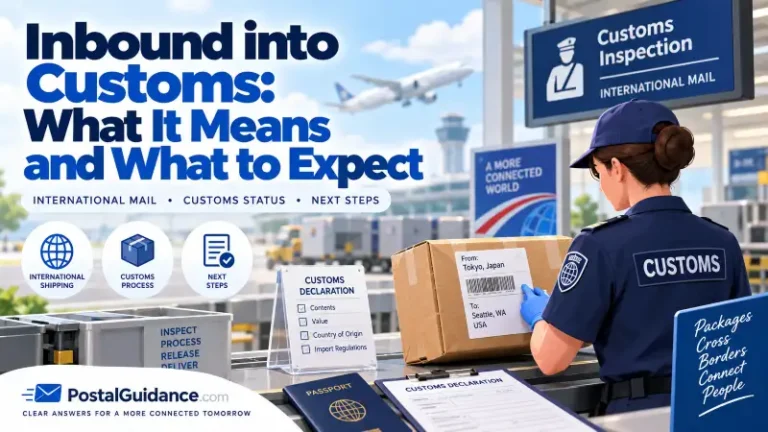

Short answer: For most packages, customs clearance takes anywhere from a few hours to about three business days. A straightforward parcel with correct paperwork and no duties owed often clears the same day. It stretches longer, sometimes one to two weeks, when duties or taxes are owed, the customs form is wrong or incomplete, the item is selected for inspection, or a facility is backlogged. If your tracking shows a customs status, that alone is not a sign of a problem.
When a package crosses a border, it pauses while the destination country’s customs authority checks what is inside, confirms it is allowed, and decides whether any duties or taxes apply. In the US that authority is Customs and Border Protection (CBP). Most of the time this is quick and automated, but a handful of factors decide whether your package clears in hours or sits for days.
Typical customs clearance times
| Situation | Usual clearance time |
|---|---|
| Straightforward parcel, no duties owed | A few hours to 1 business day |
| Duties or taxes due (waiting on payment) | 1 to 3 days, sometimes longer |
| Selected for inspection | 2 to 5 business days |
| Incomplete or incorrect paperwork | Several days to 2 weeks |
| Peak season or facility backlog | Add several days on top |
These are general ranges, not guarantees. A package can clear faster than expected, or a single flag, like an unpaid fee, can hold it well beyond the normal window. If your tracking has been sitting on a customs message, our guide on what “Inbound Into Customs” means explains exactly what that status is telling you.
What slows customs down
Delays almost always trace back to one of a few causes:
- Duties or taxes are owed. If the recipient has to pay a fee before release, the package waits until that payment clears. This is the single most common self-inflicted delay.
- The customs form is wrong or vague. Missing values, unclear descriptions like “gift” or “stuff,” or an understated value can all trigger a manual review.
- The item is inspected. Some packages are pulled for a closer look, either at random or because of what was declared. Inspection adds days.
- Restricted or prohibited contents. Items that need a permit, or that are not allowed at all, can be held or seized.
- Backlogs. Holiday peaks and staffing crunches slow every package moving through a facility.
The 2026 change worth knowing about
There is one recent shift that has lengthened customs times for small packages entering the US. On August 29, 2025, the US ended the $800 de minimis exemption, the rule that used to let low-value parcels enter duty-free with almost instant clearance. Now all imported packages, regardless of value, go through full customs processing and can owe duties.
The practical effect is that a small parcel that once cleared in a couple of hours can now take a couple of days, and customs brokers have reported large backlogs as the volume of formal filings jumped. If you are receiving something from abroad in 2026, build in extra time and expect that a fee may apply where one did not before. For senders, the flip side of this, how thresholds work when shipping out of the US, is covered in our guide on shipping to Canada.
How long is too long?
A day or two on a customs status is normal, and up to about a week is still within range for a package that owes duties or got inspected. Start paying closer attention when:
- The package has been in customs for more than 7 to 10 days with no change.
- You received a notice to pay a fee but the tracking has not moved after you paid.
- The status has not updated at all for over a week and the estimated delivery date has passed.
Even then, a long customs hold usually means paperwork or a fee, not a lost package. Genuine losses at customs are rare.
What you can do to speed it up
You cannot rush the customs authority itself, but you can remove the things that cause holds:
- Pay any duty or tax notice immediately. Carriers such as UPS, FedEx, and DHL, and the postal service, will email or leave a notice when a fee is due. The package will not move until it is paid.
- Check the tracking for a required action. Sometimes customs needs more information from the recipient, such as an ID number or a description of the contents.
- Contact the carrier, not customs. After about 7 to 10 days, the shipping carrier can tell you why a package is held and whether anything is needed from you.
- For senders, declare accurately. The best way to avoid a customs delay is on the way out: a complete, honest customs form with a clear description and correct value.
The bottom line
Customs usually takes hours to a few days, not weeks. A customs status on your tracking is routine and not a warning by itself. The delays that matter come from unpaid fees, bad paperwork, or an inspection, and most resolve on their own or as soon as a fee is paid. With the US ending its de minimis exemption in late 2025, small international parcels now take a little longer and may carry a fee, so give them extra time. For the official rules on duties and importing purchases, see CBP’s guide on buying online and customs.