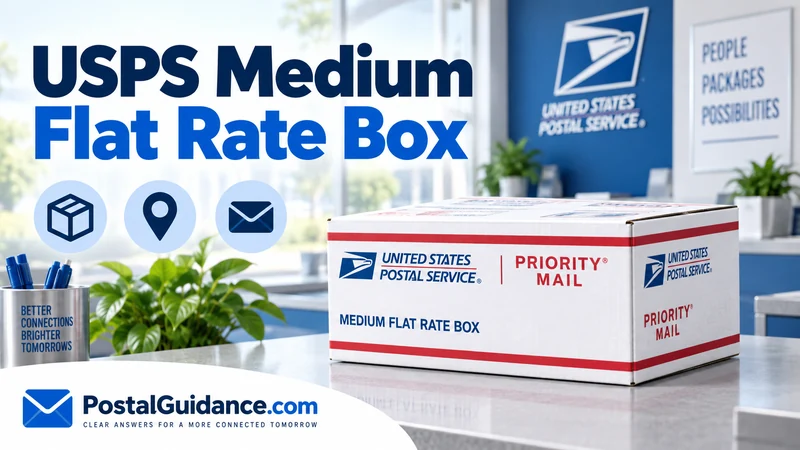
USPS sells two completely different box shapes under the same medium flat rate box name. Both cost exactly $24.80. Neither one is simply a bigger version of the small box.
One stands tall for items that load from the top. The other lies flat and wide, built for items that slide in from the side. Picking the wrong shape wastes space even though the price stays identical either way.
Here is both shapes in full. This covers exact dimensions, current price, what fits each one, and the awkward middle tier question of when a different size wins instead.
The two medium flat rate box shapes
The top loading version measures 11.25 by 8.75 by 6 inches outside. Its usable interior comes to 11 by 8.5 by 5.5 inches, once the cardboard thickness is accounted for.
The side loading version measures 14 by 12 by 3.5 inches outside instead. Its interior comes to roughly 13.625 by 11.875 by 3.375 inches.
That side loading shape is wider and flatter than the top loading one. Both ship up to the standard 70 pound Priority Mail limit.
Both also include USPS Tracking and up to $100 of insurance automatically. That coverage is the same as every other Priority Mail shipment gets.
What both shapes cost
The retail price is $24.80 at the post office counter, identical for either shape. Commercial pricing through Click-N-Ship brings that down to $21.17 for either one.
This medium flat rate box price comes from the Notice 123 list in effect since July 12, 2026. It was still current when checked in late August 2026 against the live Priority Mail page.
Neither shape costs more than the other despite their different proportions. The side loading version actually holds a bit more interior volume.
That makes it the better deal by raw space, as long as the flat shape actually suits your item. Volume alone does not decide the right choice.
What fits the top loading shape
The 5.5 inch interior depth suits items that stand upright or stack. USPS points to office supplies and shoes as typical contents, and both fit the vertical shape well.
Canned goods, stacked books, bottles, and small kitchen items are common real world fits too. Anything that would tip over or crush in a flat, shallow box belongs here instead.
What fits the side loading shape
At 3.375 inches deep, this shape suits flat or lightly padded items instead. Clothing, framed photos, documents, and flat art all slide in through the side opening without folding.
Sellers on eBay’s community forum describe reaching for this shape specifically for folded garments and picture frames. The wide, shallow interior keeps a frame from shifting the way a taller box would allow.
Anything that needs to stay flat during transit is the deciding factor. A stack of paperwork or a folded shirt rides better here than upright in the other shape.
The awkward middle tier problem
The medium sits in an uncomfortable spot. It falls between the small box at $13.65 and the large box at $34.00.
An item that barely clears the small box’s 1.625 inch depth may not need the jump to medium pricing at all. Check the small size first before assuming medium is required.
Weight based pricing often beats the medium box too. A light item under about 5 pounds, going a short distance, frequently costs less under standard zone pricing than the fixed $24.80.
Going up to the large box only makes sense in one situation. An item has to be both heavy and genuinely too big for either medium shape first.
Paying for a size jump without a matching weight jump rarely pays off. Our box size and price selector compares your exact weight and destination against all three box sizes at once, plus weight based pricing.
Where the small box and envelope options fit instead
Our small flat rate box guide covers the size below this one. It suits dense, compact items better than either medium shape does.
Our flat rate envelope guide covers the lightest tier, built for flat, thin contents. That option beats a box entirely for paperwork that never needed real depth.
Our full lineup of free Priority boxes lines up every size side by side. For genuinely large or heavy shipments, our guide to the large box’s two shapes in detail covers the tier above this one.
Ordering medium boxes for free
Both shapes are free at any post office counter, with no purchase required. The official USPS listing ships packs of 10 or 25 to your address at no charge too.
Both shapes usually sit side by side at the counter and online. Grab a few of each if you are not yet sure which shape your regular shipment actually needs.
A small business shipping both flat items and upright ones often keeps both shapes on hand permanently. That avoids guessing wrong on a busy packing day.
The bottom line
The medium flat rate box comes in two shapes for one $24.80 price. Top loading suits upright and stacked items, while side loading suits flat and wide ones.
Check the shape against your item before assuming the medium size is even the right tier. The small box, the large box, and plain weight based pricing all beat it under the right conditions.