Ten boxes into a shipping day, a cheap packing tape dispenser starts skipping instead of cutting clean. The tape tears jagged, the roll wobbles, and a five second job turns into a fight.
The right dispenser prevents almost all of that. The wrong one turns a simple task into the most annoying part of packing a shipment.
The three types of packing tape dispenser
A packing tape dispenser comes in three real forms, and each one suits a different kind of shipper. Handheld tape guns dominate individual and small seller shipping by a wide margin.
Tabletop dispensers speed up repetitive sealing where the same box size runs through again and again. Water activated dispensers are a separate category entirely, built for gummed paper tape rather than plastic tape.
| Type | Best for | Typical cost |
|---|---|---|
| Handheld tape gun | Individual sellers, mixed box sizes, no fixed packing station | Low |
| Tabletop dispenser | Repetitive sealing at one station, higher daily volume | Low to mid |
| Water activated dispenser | Tamper evident sealing, brand focused sellers | Mid to high |
What makes a handheld packing tape dispenser good
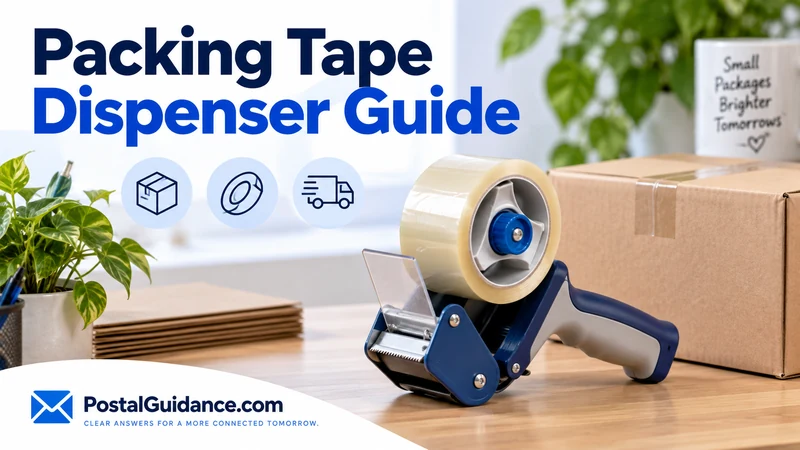
Three parts separate a dispenser worth keeping from one headed for the trash. The blade is the first and most important.
A serrated steel blade cuts clean for years. A cheap aluminum or plastic blade dulls within weeks and starts tearing tape instead of slicing it.
The brake, sometimes called the tension control, is the second part. It is a small screw or dial that controls how freely the roll spins.
Too loose, and the roll overspins and tangles. Too tight, and pulling tape takes real effort every single time.
Weight and frame material come third. A metal frame with some real heft stays steady during the pull.
A light plastic frame flexes under regular use, and it can crack outright after a few months. Retractable blade guards matter too, since an exposed blade nicks fingers during a fast packing session.
Tabletop dispensers: when they earn their place
A tabletop dispenser sits fixed on a counter and lets a box slide under the blade. That setup speeds up sealing noticeably once the same size box repeats dozens of times a day.
It rarely makes sense for an individual seller packing a handful of different sized boxes a day. The setup cost and counter space are hard to justify at low volume.
Warehouses and higher volume fulfillment operations are where tabletop dispensers actually earn their keep. Some models add a foot pedal or an electric feed for even faster sealing.
Water activated dispensers are a different tool entirely
Water activated tape uses a gummed adhesive that only sticks once it gets wet. It bonds directly into the box fibers instead of sitting on top, and that bond cannot be peeled back off cleanly.
A dedicated water activated dispenser holds a small water reservoir and wets the tape as it feeds out. Manual desktop versions cost relatively little.
Electric feed models built for high volume sealing can run well into the hundreds of dollars. The jump in price buys speed, not a stronger seal.
Brands that care about tamper evidence lean on this format specifically for that reason. A cut or peeled seam is obvious immediately, which plain plastic tape cannot offer.
The noise reality nobody puts in the spec sheet
Standard plastic packing tape makes a sharp screech when it unwinds fast. One operator sealing a few hundred boxes a shift hears that sound constantly.
Multiply that across a small team in one room. It becomes a genuine daily annoyance rather than a minor detail.
Manufacturers have started responding directly to this complaint. Some tape brands now sell a quieter unwinding formula marketed specifically as low noise.
A dispenser itself changes little about the sound. The screech comes mostly from the tape’s adhesive releasing from the roll, not from the tool holding it.
What sellers actually use
Small sellers overwhelmingly reach for a basic handheld tape gun. That pattern holds true across shipping and reselling communities.
It works on any box shape without needing a fixed station. Sellers packing higher volumes describe upgrading to a metal frame handheld model first, before ever considering a tabletop unit.
The upgrade usually happens after a plastic gun cracks or the blade dulls past saving. Water activated dispensers show up mainly among sellers who want a tamper evident look for their brand specifically.
Cost and the extra step of loading water keep most other sellers away from that format. A tabletop unit belongs to sellers running a dedicated packing station, not casual ones.
Loading and keeping a dispenser working
Most dispenser complaints trace back to loading the roll backward or letting the blade go dull. Our full walkthrough for loading a tape dispenser correctly covers both fixes step by step.
Replacing a dull blade costs very little and solves most cutting complaints on its own. A dispenser that jams constantly is worth troubleshooting before assuming it needs to be replaced.
Matching the dispenser to the right tape
A dispenser only performs as well as the tape loaded into it. Acrylic, hot melt, and water activated tape each behave differently inside the same dispenser, which our breakdown of packing tape types and widths covers in detail.
Almost every dispenser on the market is built around standard 2 inch tape. Confirm that width before buying a dispenser for tape already on hand.
For named product options rather than general categories, our full comparison of tape and mailing packages lists specific picks by use case.
The dispenser is only part of a sealed box
A great dispenser cannot fix a box that is the wrong size or a seam that never gets taped at all. See how standard box sizes and strength ratings break down for the container half of the job.
Cushioning still matters before the box ever reaches the dispenser. Our notes on picking the right bubble thickness cover that step.
The bottom line
The best packing tape dispenser for most sellers is a simple metal frame handheld gun with a sharp blade. A working brake matters just as much as the blade does.
Tabletop and water activated dispensers only pay off at higher volume or for a specific tamper evident need. Spend the extra few dollars on a metal frame over plastic.
That single choice prevents most of the jamming and cracking complaints sellers report.